How does a premium personal carry brand compete when AI is doing the shopping research?
A premium personal carry brand competes by being believed before the customer starts comparing. Shoppers now describe a situation to a search box, a marketplace or an AI assistant, get a list of options, and judge price, proof and fit before any brand has spoken. The brands that hold their price tend to be the ones the customer already has a reason to trust.
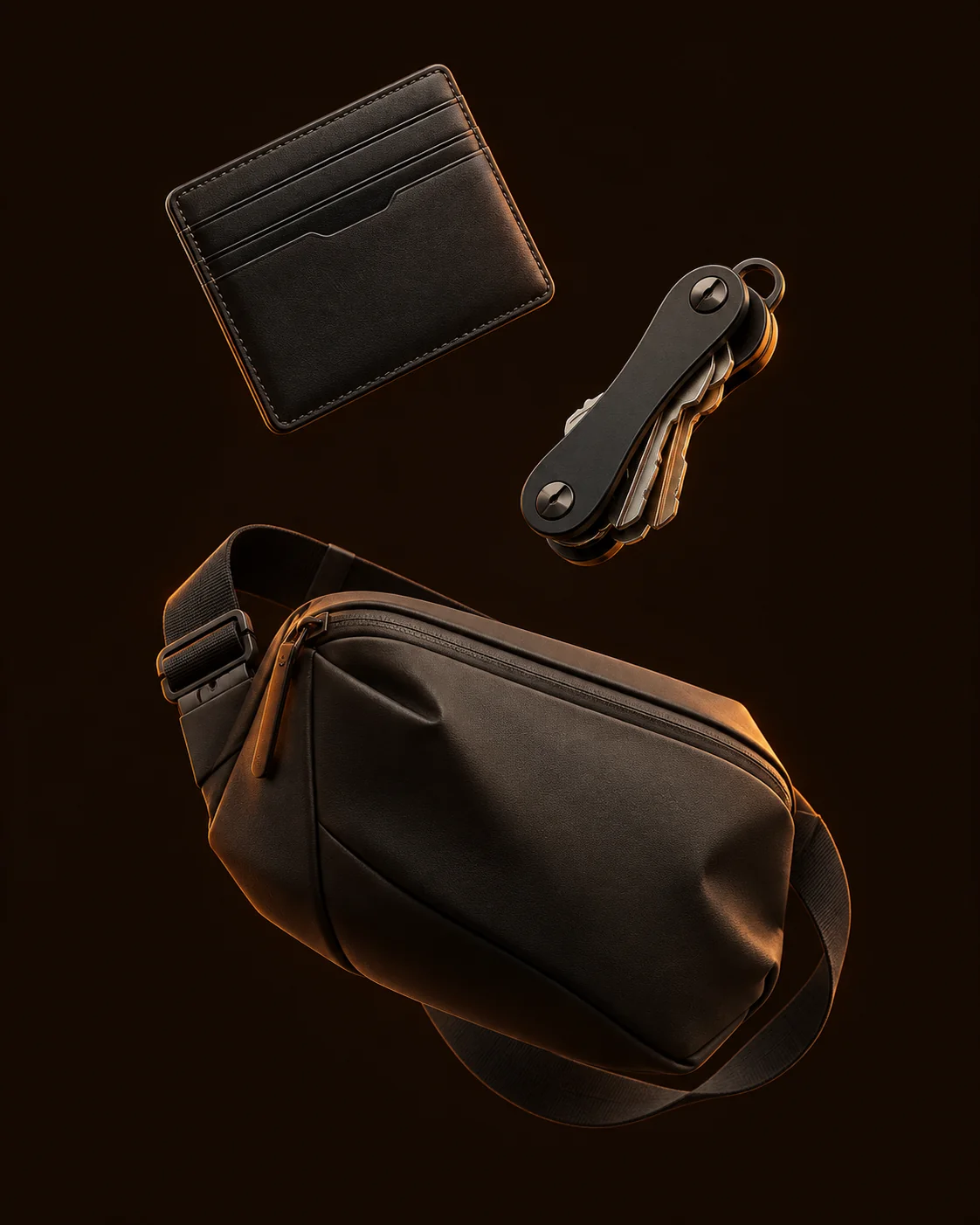
A personal carry brand is a consumer brand that makes the things people carry every day: bags, backpacks, slings, wallets, key organisers, laptop sleeves and travel pieces. Most are founder-led and design-led, and priced above the mass market. We spent September researching the Australian category. What follows is about the category, not any one business.
Are Australian shoppers really unwilling to pay full price?
Most say so. Australia Post's 2026 eCommerce Report, using 2025 survey data, found 59% of Australian shoppers say they never buy at full price, and 81% say they hunt for online deals before buying. These describe shoppers in general, not personal carry. They still set the market a premium bag is sold into: your price gets judged next to a discount.
The squeeze reaches well-off buyers too. Deloitte's 2026 consumer products outlook (global research, not Australian and not about carry) found 47% of consumers behave as value seekers, including 35% of high-income households. For a premium brand, that makes the question what the extra money buys.
How are shoppers using AI and marketplaces to compare products?
Increasingly before they reach a brand's own site. Australia Post found 32% of Australian shoppers use AI for shopping advice, and marketplaces accounted for 42% of Australian online transactions in the final quarter of FY26. Google's own AI shopping demonstration compares carry-on suitcases by dimensions and weight, so carry is the worked example. That demonstration is a product announcement, not proof of how many people buy this way yet.
AI has not replaced search. What has changed is where the comparison happens: somewhere you do not control, on terms the customer set. All you control is what they already believe when they get there.
What makes a premium bag hard for a cheaper copy to match?
Not the product photo. We sorted what a premium carry brand sells into six layers: surface, performance, system, service, brand and distribution. A cheaper alternative can copy the surface from a picture, the silhouette, the pockets, the colour, the feature list. It is much harder to copy durability across production runs, a repair and returns promise, and the trust of a specialist community.
The test we use: once a credible cheaper version is visible, what does yours still give the buyer that is worth the gap? If the answer lives only in the surface layer, the product may still sell, but the premium is exposed. To run it yourself, pick your hero product and write one sentence, in a customer's words, for each of the harder-to-copy layers. The lines you cannot write are where the premium is exposed.
What do customers actually ask before they buy a premium bag?
Mostly they ask whether one bag can handle a working day. In public reviews and specialist communities the recurring questions are whether one bag can cover work and a short trip, whether it protects a 16-inch laptop, and whether the price is justified. After the purchase they ask whether it will last and whether it can be repaired.
The job that keeps coming up is one product, or a small connected set, that works across the commute, the office, a short trip and the airport. Laptop protection and comfort when full tend to decide it more than capacity does. This evidence is qualitative and weighted toward bag enthusiasts and travel communities, so read it as a source of better questions, not a survey result.
Will more range, more content or better ads fix it?
Not on their own. More range, content or polish often treats the symptom. We found no public evidence that a bigger range creates a second purchase in this category, despite how often brands expand into one. We did find four things worth testing before spending more:
- Make care and repair a visible reason to choose.
- Own one demanding job before adding adjacent ones.
- Build demand around the move from desk to trip.
- Let customers vote with a deposit before an extension gets inventory.
Each can be tested inside a fortnight with one cohort and one number.
That research describes what brands publicly offer. It does not prove those offers cause growth, and product, pricing and fulfilment decisions sit with the business.
Where Intentional fits
Intentional is a Melbourne-based growth advisory and creative agency for design-led consumer brands, including personal carry. We work on customer research, positioning and messaging, brand and creative development, and campaign and channel planning, and we measure what the work changes in the business. We do not design products, set prices, run inventory or implement product feeds and fulfilment.
The full read covers twelve findings, most with something to run on your own brand that week, including the customer-question bank and the premium-resilience test. It is written for founders of established Australian mid-premium carry brands. Read the full Personal Carry deep dive at carry.intention.al. Enter your work email and revenue band and the read opens on the page. We do not email the link, so bookmark it. If your business looks like a fit for the Growth Alignment Review, Chris may write to you once, personally. Reply "stop" and that is the end of it.
FAQ
What is a personal carry brand? A consumer brand that makes the things people carry every day, such as bags, backpacks, wallets, key organisers and travel pieces. Most are design-led, founder-led and priced above the mass market.
How do premium brands compete with cheaper alternatives? By giving the buyer a reason to pay more that a cheaper copy cannot take from a product photo: proven performance, a service promise, specialist credibility and community trust. Surface features alone leave the premium exposed.
Do Australian shoppers use AI to research purchases? Some do. Australia Post's 2026 eCommerce Report found 32% of Australian shoppers use AI for shopping advice. It describes shoppers generally, not carry buyers specifically.
Is it worth selling on marketplaces as a premium brand? The comparison happens there whether or not you list. Marketplaces took 42% of Australian online transactions in the final quarter of FY26. The question is what the customer already believes about you when they see you beside the alternatives.
Will a bigger product range increase repeat purchases? We found no public evidence that it does in personal carry. Check your own cohort data before treating a range as the answer, and test care and repair, or a single demanding job, first.
Where can I read the full research? At carry.intention.al. It is written for established Australian mid-premium carry brands.